



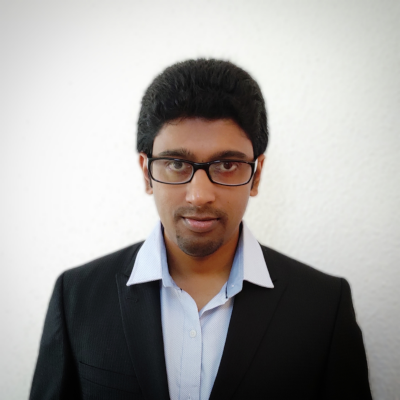
Debopam Bhattacherjee
speaker
I am a Senior Researcher in the Systems group at Microsoft Research Lab, India. My research is focused on networked system design, Internet architecture, and network performance measurement. I co-organize a Webinar series on LEO satellite networks. To know more and to subscribe for free, visit LEOCONN WS. Currently serving as Publicity Co-chair @ ACM MobiCom’24 and as Advisory Board + TPC Member @ LEO-NET MobiCom’23. I defended my PhD in computer networks at ETH Zurich (Network Design lab, Systems group), Switzerland in 2021. My PhD thesis focused on “new space” low-Earth orbit satellite network design and simulation. My recent work on simulating and analyzing satellite networks won the Best Paper Award at ACM IMC 2020. I also received IRTF’s Applied Networking Research Prize 2020 for my work on satellite network topology design. I worked as a research fellow at the Max Planck Institute for Informatics (Germany) during the summer of 2019. I earned a dual master’s degree in security and mobile computing from KTH Royal Institute of Technology (Sweden) and Aalto University (Finland). I earned my bachelor’s degree in computer science from Jadavpur University (India).
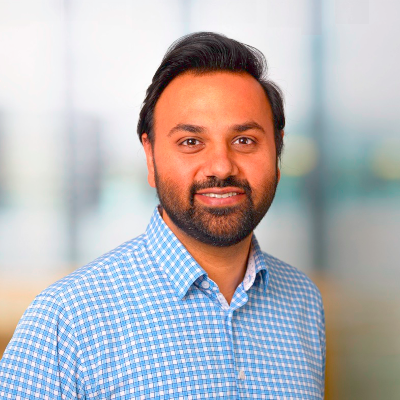
Nitinder Mohan
speaker
I am a (tenured) Assistant Professor in the Networked Systems Group of the Faculty of Electrical Engineering, Mathematics, and Computer Science (EEMCS) at the Delft University of Technology (TU Delft), Netherlands. I lead the Systems and Protocols for Edge-Enabled Internet (SPEAR) lab which focuses on research in the areas of edge computing, next-generation network protocols, Internet-wide measurements, and critical application management/deployment. Read more about my research here. Prior to joining Delft, I was a senior researcher in the Technical University of Munich (TUM), Germany. I received my Ph.D. from the University of Helsinki, Finland in 2019. My Ph.D. thesis has been awarded Outstanding Ph.D. Dissertation Award by the IEEE Technical Committee on Scalable Computing (TCSC). I received my Master’s from IIIT Delhi, India in 2015. I am also co-founder of Oakestra, a lightweight and efficient framework for orchestrating and managing edge computing infrastructures.
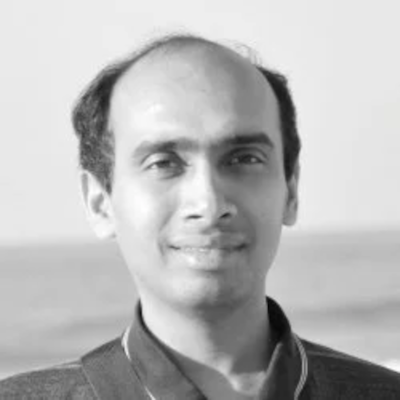
Nishanth Sastry
speaker
Prof. Nishanth Sastry is Associate Head of School for Research and Innovation in the School of CSEE, and leads the Networked Systems Theme within the Surrey Centre for Cyber Security. He is also a Surrey AI Fellow and co-leads the Pan University Surrey Security Network. Nationally, he serves on the REF 2029 sub-panel for Computer Science and Informatics (UoA 11), and is a member of EPSRC’s Digital Security and Resilience Strategic Advisory Team and the Equality, Diversity, Inclusion and Skills Strategic Advisory Network. He is an ACM Distinguished Speaker and co-leads the Social Data Science Interest Group at the Alan Turing Institute for Data Science and AI. His work spans a number of topics related to social media and computer networking, including content delivery, LEO Satellite Networks, web privacy and online harms. Prof. Sastry holds a Bachelor’s degree (with distinction) from R.V. College of Engineering, Bangalore University, a Master’s degree from University of Texas, Austin, and a PhD from the University of Cambridge, all in Computer Science. Previously, he spent over six years in the Industry (Cisco Systems, India and IBM Software Group, USA) and Industrial Research Labs (IBM TJ Watson Research Center). He has also spent time at the Massachusetts Institute of Technology Computer Science and AI Laboratory. His honours include a Best Paper Award at SIGCOMM Mobile Edge Computing in 2017, a Best Paper Honorable Mention at WWW 2018, a Best Student Paper Award at the Computer Society of India Annual Convention, a Yunus Innovation Challenge Award at the Massachusetts Institute of Technology IDEAS Competition, a Benefactor’s Scholarship from St. John’s College, Cambridge, a Best Undergraduate Project Award from RV College of Engineering, a Cisco Achievement Program Award and several awards from IBM. He has been granted nine patents in the USA for work done at IBM. Nishanth has been a keynote speaker, and received media coverage from print media such as The Times UK, New York Times, New Scientist and Nature, as well as Television media such as BBC, Al Jazeera and Sky News.
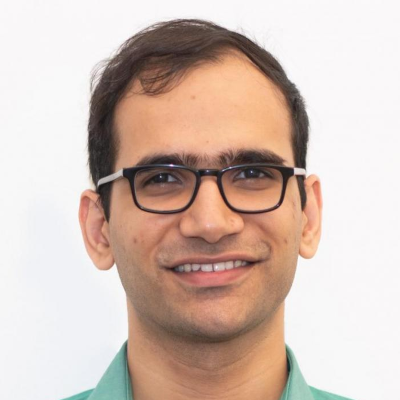
Deepak Vasisht
speaker
I am an Assistant Professor in Computer Science at the University of Illinois Urbana-Champaign (UIUC). I also hold affiliate appointments in Electrical and Computer Engineering, and the Coordinated Sciences Laboratory at UIUC. I lead the rural connectivity thrust at the Center for Digital Agriculture. My group’s research focuses on designing the next generation of mobile computing and wireless networking systems such as AI-driven networks, satellite networks, in-body systems, and 6G. I am deeply interested in developing solutions for human-critical problems in various application domains such as rural connectivity, agriculture, and healthcare. I am a recipient of the NSF CAREER award, three best paper awards, and the ACM SIGCOMM Doctoral Dissertation Award. Prior to UIUC, I graduated with a Ph.D. from MIT, advised by Prof. Dina Katabi. During my Ph.D. (and after), I worked at Microsoft Research on FarmBeats, an AI and IoT platform for agriculture that has been used by agricultural companies and farmers across the world. I received my undergraduate degree from IIT Delhi with the President of India gold medal. In 2021, I was named a graduate of the last decade by IIT Delhi.
Jim Kurose
organizer
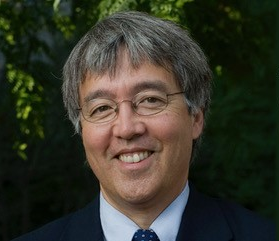
Jim Kurose is a Distinguished University Professor in the College of Information and Computer Sciences at the University of Massachusetts Amherst, where he has been on the faculty since receiving his PhD in computer science from Columbia University. He received a BA in physics from Wesleyan University. He has held a number of visiting scientist positions in the US and abroad, including the Sorbonne University, the University of Paris, INRIA and IBM Research. His research interests include computer network architecture and protocols, network measurement, sensor networks, and multimedia communication. He is proud to have mentored and taught an amazing group of students, and to have received a number of awards for his research, teaching and service, including the IEEE Infocom Award, the ACM SIGCOMM Lifetime Achievement Award, the ACM Sigcomm Test of Time Award, and the IEEE Computer Society Taylor Booth Education Medal. With Keith Ross, he is the co-author of the best-selling textbook, Computer Networking: a Top Down Approach (Pearson), now in its 8th edition. He is a member of the National Academy of Engineering and a Fellow of the ACM and the IEEE.
From January 2015 to September 2019, Jim was on leave, serving as Assistant Director at the US National Science Foundation, where he led the Directorate of Computer and Information Science and Engineering (CISE). With an annual budget of nearly $1B, CISE’s mission is to uphold the nation’s leadership in scientific discovery and engineering innovation through its support of fundamental research in computer and information science and engineering and transformative advances in cyberinfrastructure. Here is a blogpost on his NSF work. While at NSF, he also served as co-chair of the Networking and Information Technology Research and Development Subcommittee (NITRD) of the National Science and Technology Council Committee on Technology, facilitating the coordination of networking and information technology research and development efforts across Federal agencies. In 2018, Jim also served as the Assistant Director for Artificial Intelligence in the White House Office of Science and Technology Policy (OSTP).